GE-200 Series Time-Sharing System (DTSS)
Check out DTSS Revisited in our Vintage Remote Systems.
There is a particular kind of loss that haunts computing history. It is not the loss of a machine, machines can be found, restored, coaxed back to life by people patient enough to chase a cold solder joint for three days. It is the loss of a running system: the software, the operating environment, the feel of sitting down and having the thing answer you. Hardware can survive in a warehouse for fifty years. A working system can evaporate in five, when the last platform that ran it stops booting.
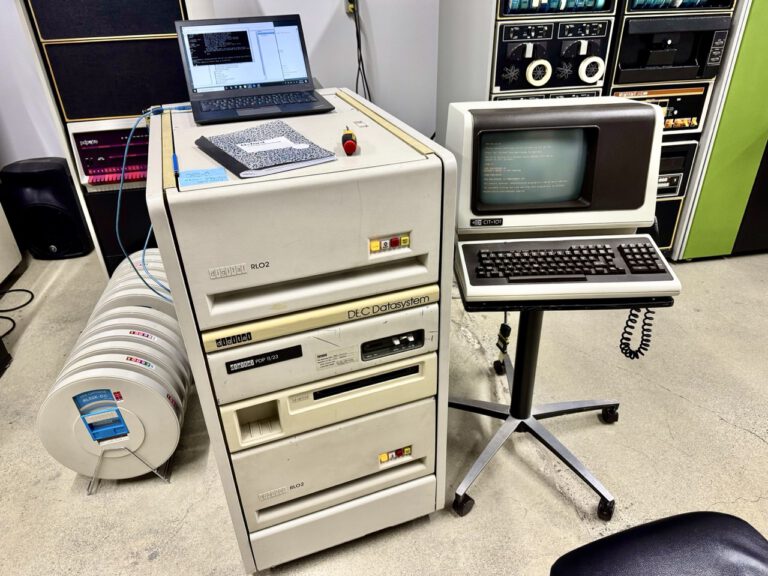
The Dartmouth Time-Sharing System is one of the most important running systems ever built, and it came very close to that second kind of loss. At the Interim Computer Museum it is now running again. Here is how it got there.
An idea at Dartmouth, built with GE
In the early 1960s, using a computer meant handing a deck of punched cards to an operator and waiting. John Kemeny and Thomas Kurtz, two mathematicians at Dartmouth, thought ordinary undergraduates should instead be able to sit down at a terminal and use a machine directly, while they were still thinking. Making that real took two inventions at once: a way for many people to share one computer, and a language a beginner could actually learn. The language was BASIC. The system that hosted it was DTSS, and it first ran in 1964. It was not the first time-sharing system – Fernando Corbató’s CTSS was running at MIT by 1961, building on an idea John McCarthy had floated at the end of the 1950s, but those systems were built by and for computer specialists. DTSS was the first built for the novice in the chair: a system whose whole reason for being was to let people who were not programmers sit down and use a computer directly, while they were still thinking.
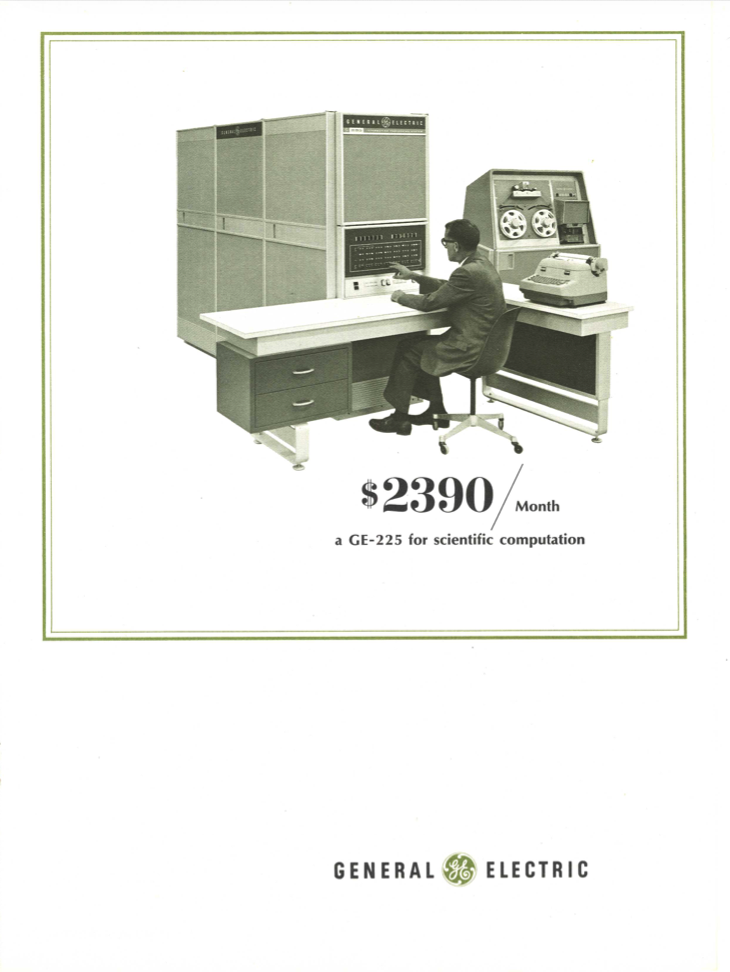
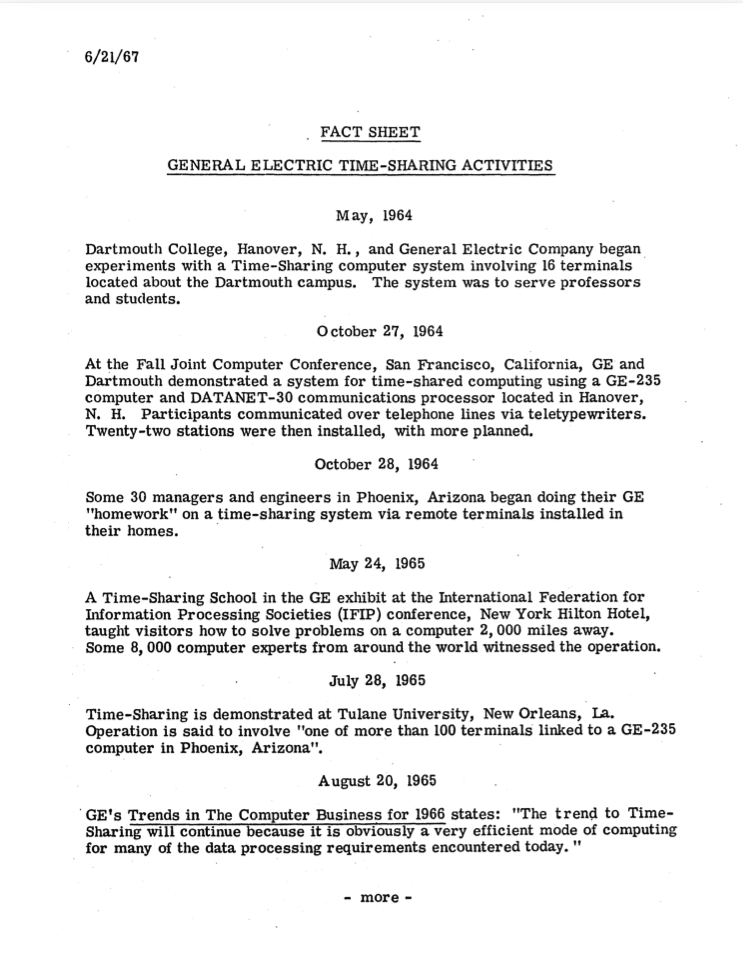
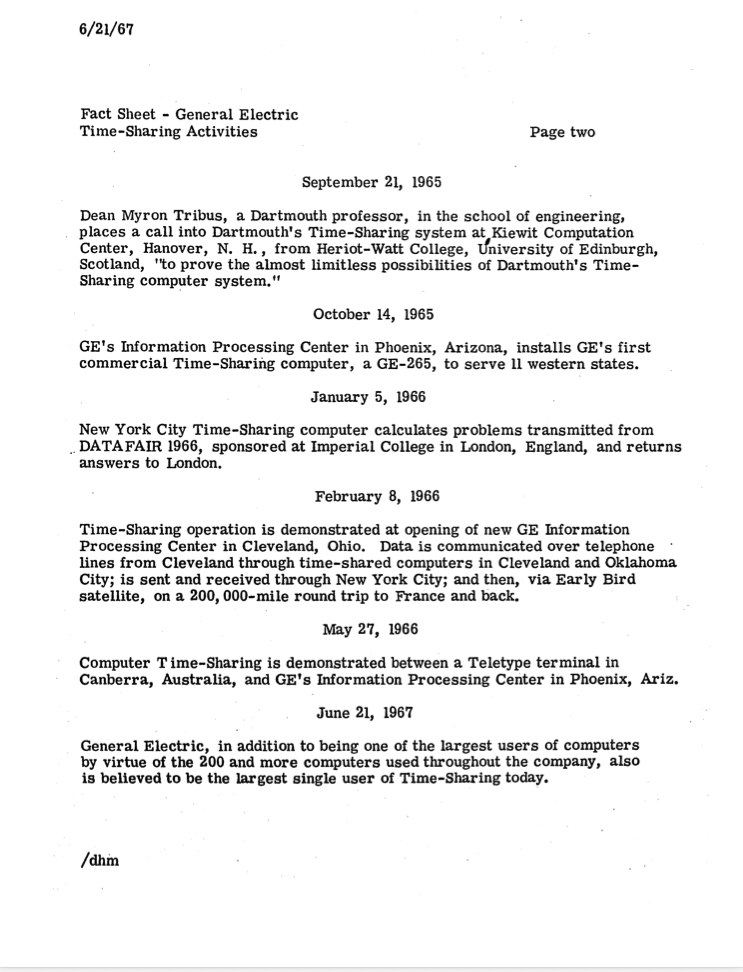
The hardware came from General Electric, and the design was genuinely clever. Rather than make one computer do everything, Kurtz and Kemeny used two. A GE-235 executed the programs in BASIC or ALGOL. A separate GE DATANET-30 (the DN-30) handled all the communications with the teletypes and scheduled work onto the 235. GE sold that paired configuration as the GE-265, the model numbers added together. This was the original DTSS, later called Phase I, and it ran from 1964 to around 1967.
GE takes it to market
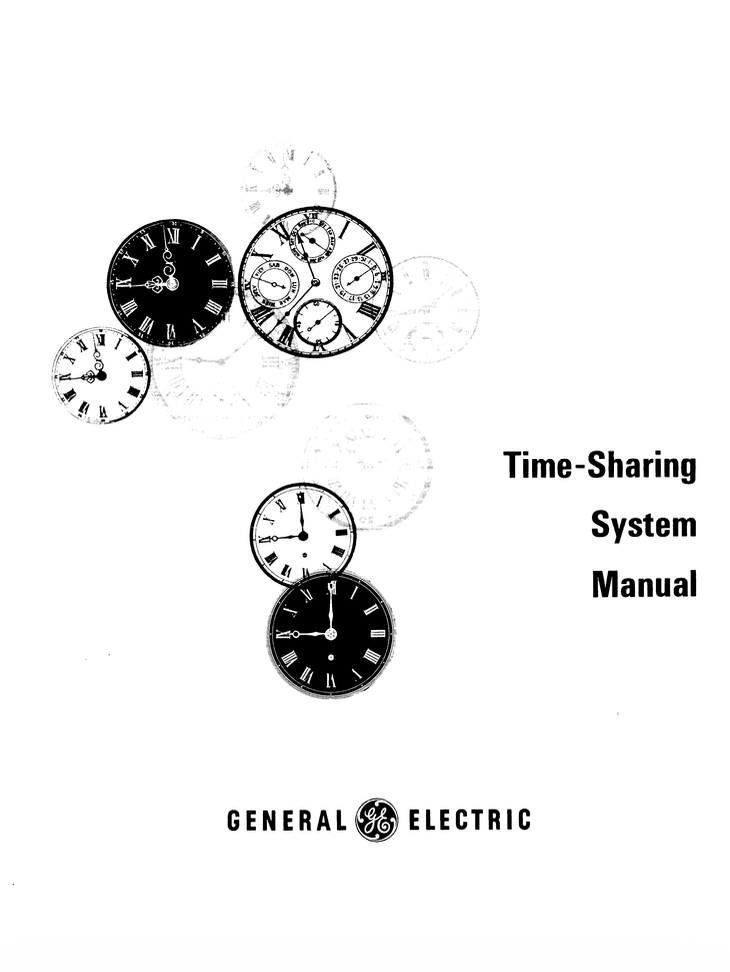
GE was already selling idle time on the computers it used for customer demonstrations, and it recognized what it had. By the mid-1960s the company was offering the Dartmouth system commercially as the GE-200 Series Time-Sharing System, on that same paired GE-235 and DATANET-30 hardware it sold as the GE-265. The reference manual for that service, dated September 1967, describes a system a Dartmouth undergraduate would have recognized on sight. A user dials in; the DATANET-30 answers the line and runs the HELLO sequence, checking the caller’s user number against the terminals accredited to use it. Once admitted, the user names a system and goes to work, and when a RUN or EDIT is issued the front end hands the job to the GE-235 through a shared area the manual calls the “Mailbox” passing along the user number, the program name, and the chosen system. The systems on offer were exactly the Dartmouth ones: BASIC, EDIT, FORTRAN, and an ALGOL that GE’s own companion manual names, without euphemism, “Dartmouth ALGOL.”
What GE put on the market, in other words, was not merely modeled on Dartmouth, it was the Dartmouth system, the two-computer design and the conversational BASIC and all, sold under a GE catalog number. For the first time a business or a school anywhere with a teletype and a phone line could dial into a friendly, BASIC-speaking computer and be answered in seconds. The system spread across the country as the first widely available taste of interactive computing.
GE eventually took its own commercial line down a separate path on the larger 36-bit GE-635 – the Mark II and Mark III services, on a different operating system, which over the years grew into the consumer network GEnie. But the thing that put interactive computing in front of people in the mid-1960s, and the thing this story is about, was that original Dartmouth system: Phase I, the GE-235 and the DATANET-30.
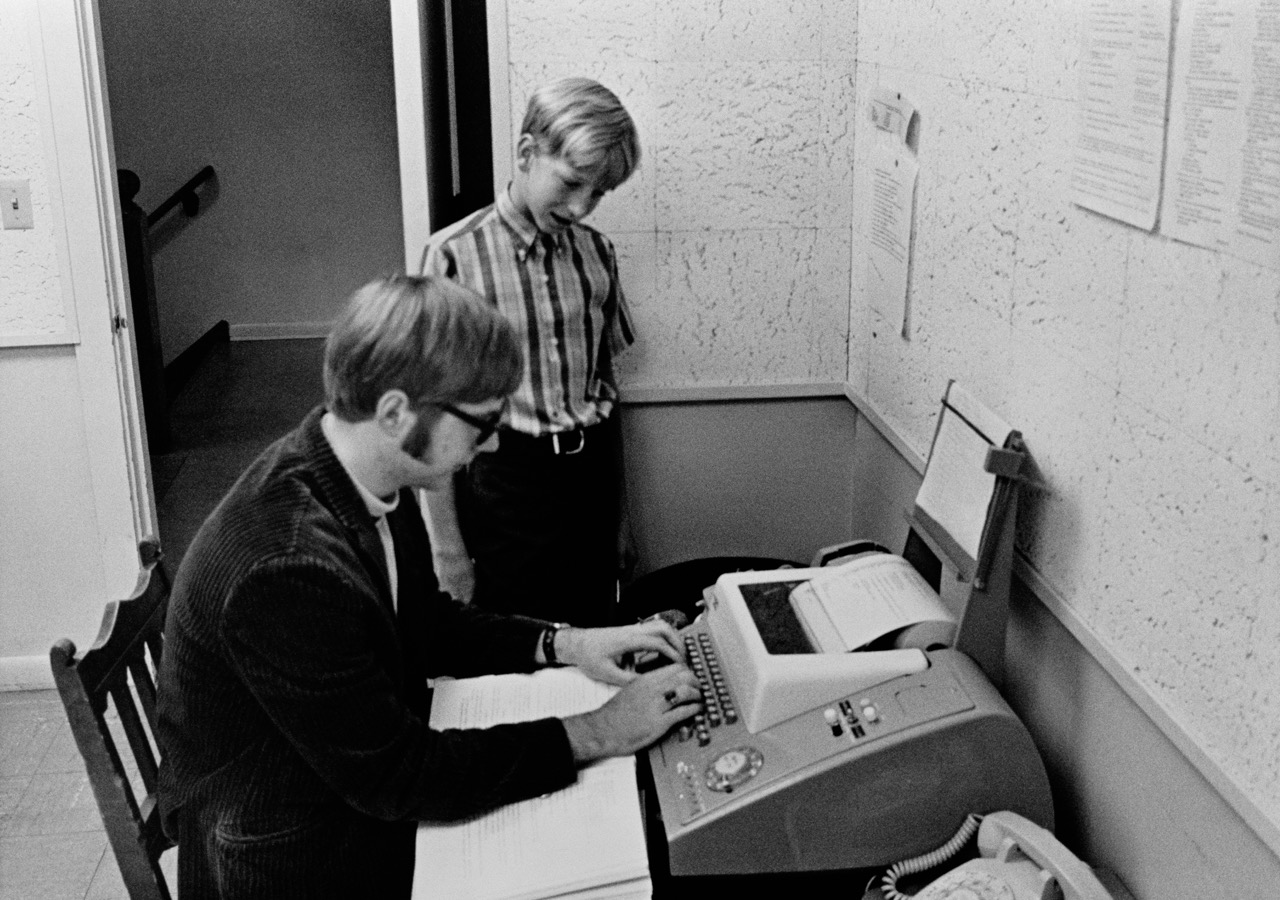
A Teletype model ASR33 in Seattle
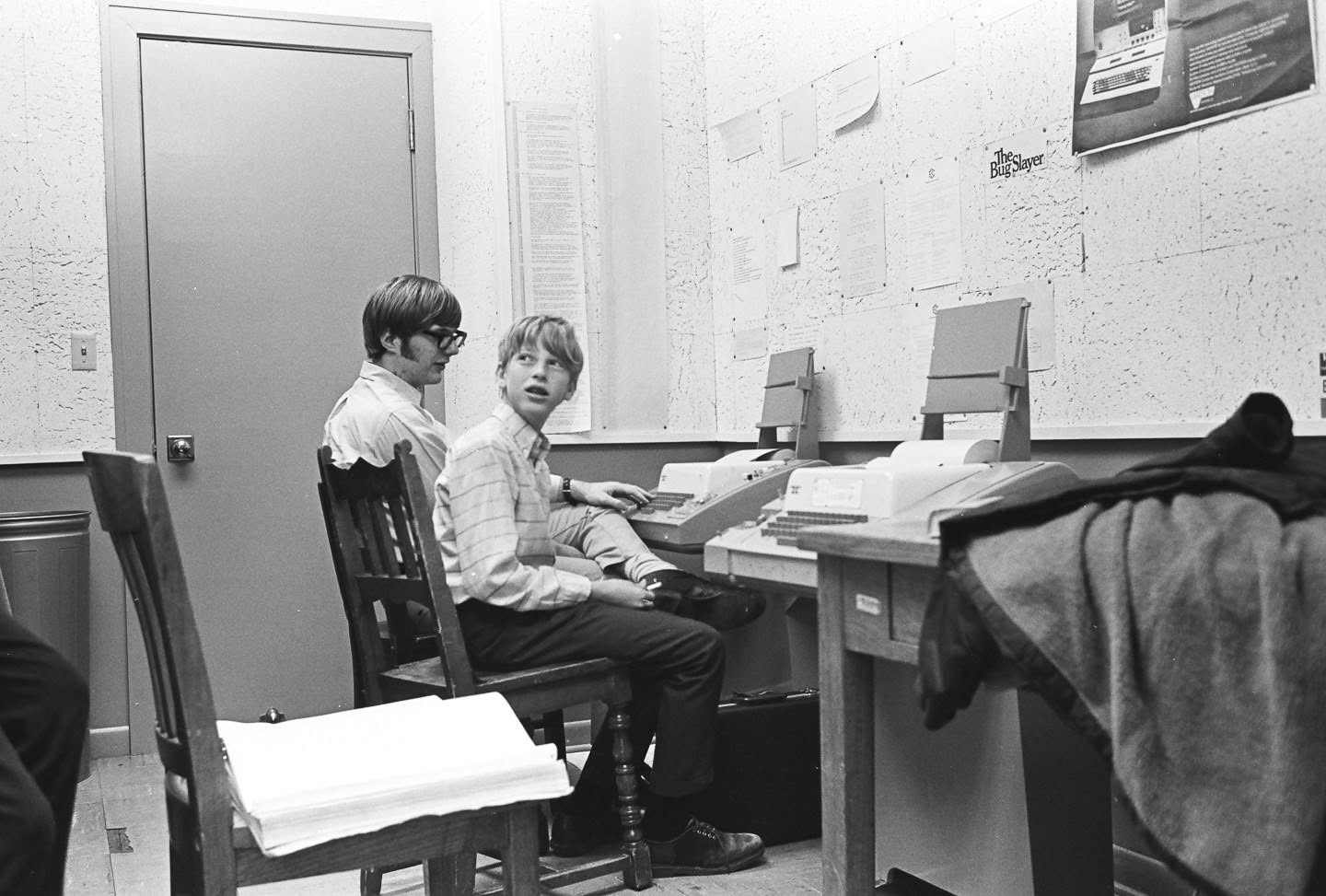
By 1968 the GE service had spread far enough to turn up in a boys’ prep school two thousand miles from Hanover. That spring, a Lakeside School teacher named Bill Dougall persuaded the Lakeside Mothers’ Club to spend the proceeds of its annual rummage sale, about $3,000, on a Teletype Model 33 and a block of time on a General Electric time-sharing system, the commercial descendant of the Dartmouth design. The machine was not part of the curriculum. It sat in a room and answered whoever sat down at it, over a phone line, in seconds. Two of the students who could not leave it alone were a thirteen year old named Bill Gates and his friend Paul Allen. Gates learned BASIC on that GE service and wrote one of his first programs, a game of tic-tac-toe, on it; with Ric Weiland and Kent Evans they formed the Lakeside Programmers Group, and when the Mothers’ Club money ran out they went looking for time elsewhere, on a PDP-10 at a local outfit called Computer Center Corporation. “If there had been no Lakeside, there would have been no Microsoft,” Gates told the school years later.
There is a straight line in that story, and it runs through the system ICM has reanimated. The friendly, conversational BASIC that caught a Seattle teenager in 1968 was the same language, and the same dial in and be answered idea, that Kemeny and Kurtz had set running in Hanover four years earlier. The environment ICM now lets a visitor type HELLO into is the ancestor of the one that, in this same corner of Puget Sound, set two of them on their way to remaking the industry.
How a working system becomes a ghost
Phase I did its job and was superseded. The hardware went the way of all 1960s mainframes. And the software – the actual BASIC, ALGOL, and the two executive programs that made the two-computer design work – survived only as paper listings, scattered among the people who had been there.
A group calling themselves the friends of DTSS set out, decades later, to bring Phase I back. Their hardest problem in the first year was simply finding the source. People had a listing here, a manual there, but nobody had BASIC itself. It turned up, eventually, in a box of old listings in the garage of a former GE employee named George Friend. From those scans the team transcribed the four principal components by hand, character by character, octal digit by octal digit, Kurtz himself re-keyed BASIC and ALGOL; John McGeachie did the GE-235 executive; Ron Martin did the DN-30 executive. They wrote assemblers to rebuild the binaries and proofread the output against the original octal, then built emulators of the GE-235 and the DN-30 so the recovered software could run at all.
It worked. And then it got stuck. The result of all that careful archaeology lived as a True BASIC simulation built for Windows and for Macintosh “Classic” that is, Mac OS 9 and later as a web emulator leaning on Java and asp.net. Every one of those platforms has since aged into obsolescence. The reconstruction succeeded, and then quietly became version-trapped: a faithful recreation of the first time-sharing system, increasingly difficult to actually run on anything you can buy today. The ghost had been brought back, only to be locked inside a haunted house nobody can enter anymore.
Running again at ICM
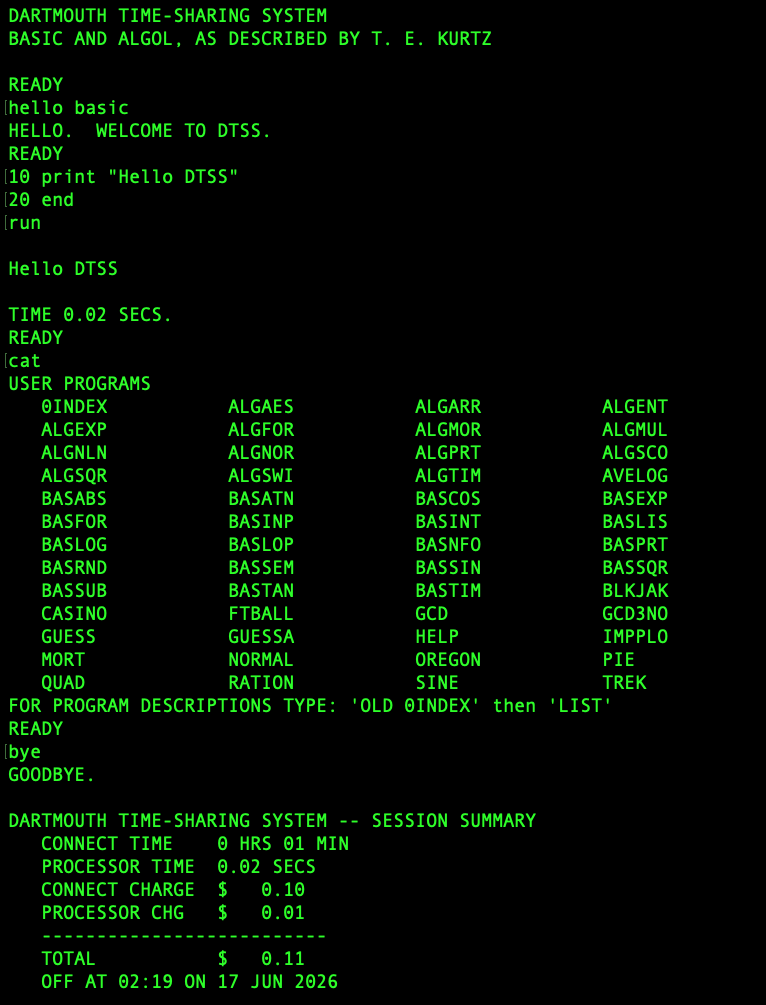
This is the gap the Interim Computer Museum set out to close, though not by the road you might expect. ICM’s DTSS is not a port of the friends-of-DTSS emulators, and it does not run the recovered GE-235 binaries on simulated iron. It is a reanimation: a faithful, dependency free re-creation of the Phase I environment, the BASIC and ALGOL systems and the executive that drove the teletype rebuilt from the ground up in portable C, from Kurtz’s own descriptions of the languages and the recovery work the friends of DTSS published. No GE-235 is emulated; no DATANET-30 schedules the work. What is reproduced is the thing a person in the chair actually touched: the conversational loop, the commands, the dialect, the feel.
That distinction is worth drawing precisely, because three different acts of preservation are easy to blur. A restored mainframe is preserved the artifact itself, kept and shown. The friends-of-DTSS emulator resurrected the system the original recovered bits, brought back on emulated hardware. ICM’s DTSS reanimates it the same behavior and the same spirit, rebuilt in a living, portable form with no dependency that can rot out from under it. Each is a real and different kind of rescue, and the reanimation exists precisely because the resurrection, faithful as it was, had been locked inside platforms that are themselves now nearly dead.
None of this would exist without the friends of DTSS. They did the irreplaceable work: the year of detective effort, the garage in New England, the hand transcription of BASIC, ALGOL, and the two executives, the assemblers and emulators that proved the system back into running existence. ICM’s version stands on that recovery. What it adds is durability, a floor that still stands, and is built not to need replacing.
The payoff is the thing museums exist for. You can sit down and type HELLO, name BASIC as your system, and write and run a program against a faithful recreation of the environment BASIC was born in, the same conversational loop a Dartmouth undergraduate had in 1964, no longer mediated by an emulator that itself needs an emulator to survive. A system that took a year of detective work and a garage to recover, and that then nearly slipped away a second time on obsolete platforms, is once again something you can use.
A restored machine shows you what computing looked like. A running system lets you find out what it felt like. The first one ever built to feel friendly is, against considerable odds, friendly again.
Sources and notes
The account of GE’s commercial service rests on a primary source: the GE-200 Series Time-Sharing Operating System Reference Manual (CPB-1455), General Electric Information Systems Division, September 1967. It documents the paired GE-235 and DATANET-30 configuration, the HELLO login and user-number validation, the DATANET-30-to-GE-235 “Mailbox” hand-off for a RUN or EDIT, and the available systems, BASIC, EDIT, FORTRAN, and “Dartmouth ALGOL” (companion manual CPB-441). The “GE-200 Series Time-Sharing System” name is the one the manual itself uses; the retrospective “Mark I” label is not from this document. See https://www.bitsavers.org/pdf/ge/ for further documentation.
The Lakeside account follows Gates’s own recollections and standard biographical sources: the 1968 Lakeside Mothers’ Club rummage sale (about $3,000), the ASR-33 teletype and dial-up GE time-sharing service, the Lakeside Programmers Group (Gates, Allen, Ric Weiland, Kent Evans), and the later move to a PDP-10 at Computer Center Corporation (“C-Cubed”). The “If there had been no Lakeside” remark is from Gates’s 2005 Lakeside commencement address. The specific GE model the school dialed into is not pinned here; the documented link is the BASIC and the dial-in service, both descended from Dartmouth.
The Phase I recovery, the garage listings, the hand transcription of BASIC, ALGOL, and the two executives, and the assemblers and emulators built to run them, is the work of the friends of DTSS, on which ICM’s reanimation stands. Official site: https://dtss.dartmouth.edu
On primacy: DTSS was not the first time-sharing system. Fernando Corbató’s CTSS was demonstrated at MIT in November 1961 and was a stable, large scale system by 1963; John McCarthy proposed the concept around 1959; Robert Fano’s Project MAC, which received a second CTSS in late 1963, went on to build Multics. CTSS is generally credited as the first general-purpose time-sharing system. DTSS’s distinction, and the claim this piece makes, is narrower and firmer: it was the first time-sharing system built for non-specialist users, the first designed to feel friendly to the person in the chair, which is why it produced BASIC and the idea of computing as a public utility.